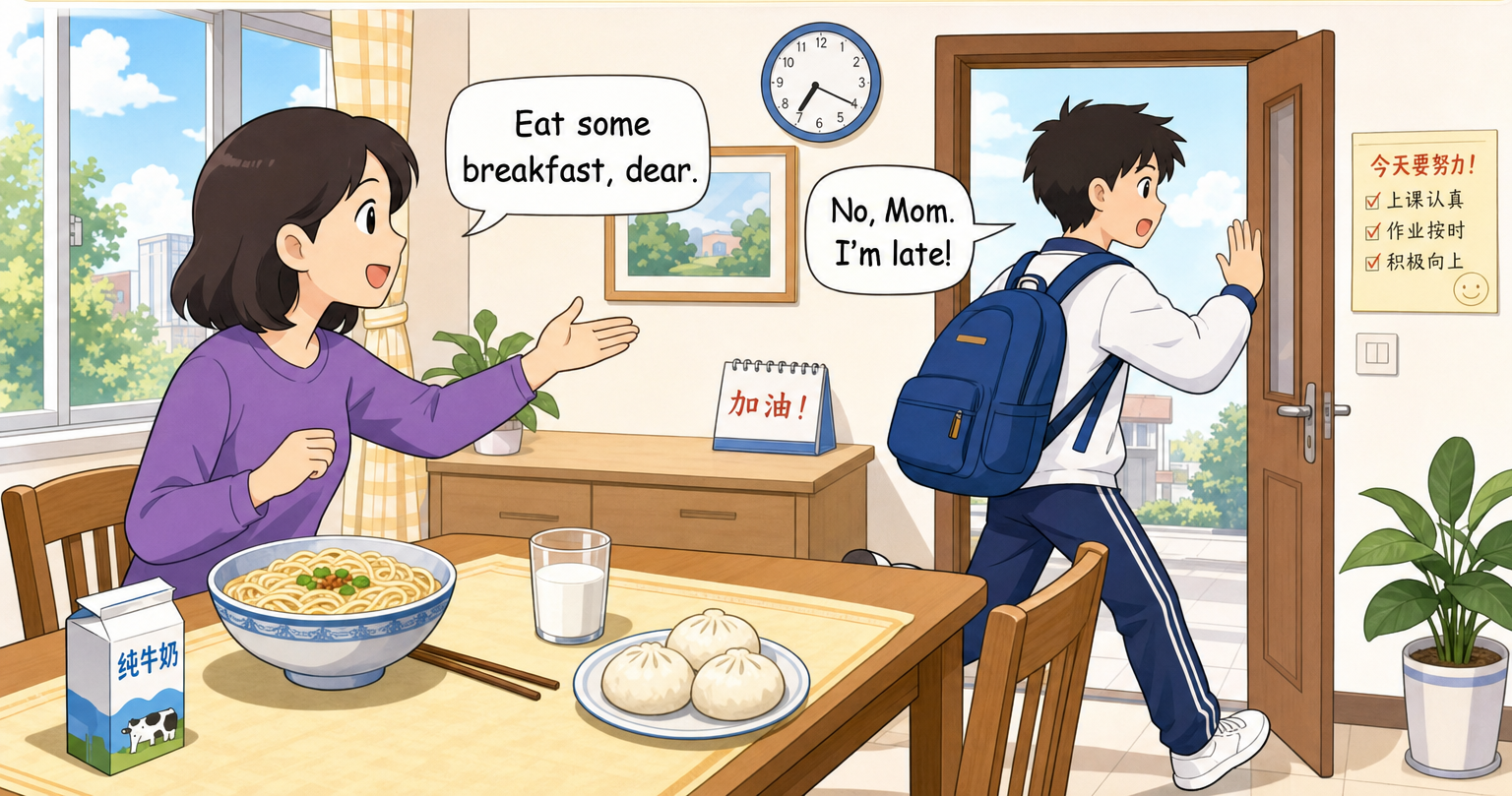
左:早晨没吃早饭就出门 · 右:观察时刻(可调到过去)。
—
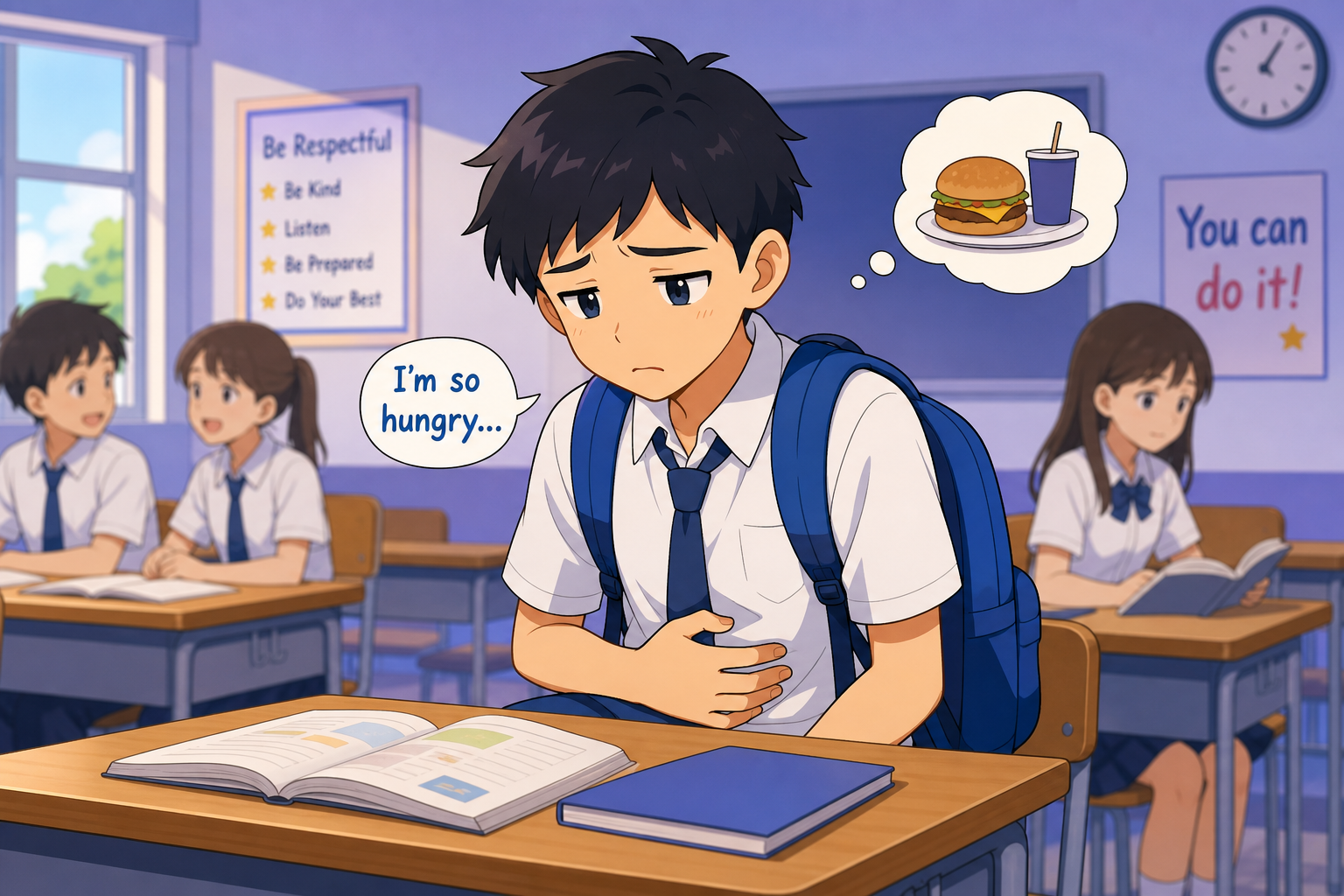
今天早晨
现在
现在
当观察点落在过去时:较早的动作 A 是较晚动作 B 的原因。对 A 我们用???——点击下方显示名称。
??? · 点击显示
过去完成时 · Past Perfect
A
过去的过去
B
过去
讲述
现在
A · 更早
hadn't eaten … breakfast
没吃早饭(更早)
hadn't eaten … breakfast
没吃早饭(更早)
→ 导致 →
B · 观察点
was hungry at that moment
在那时肚子饿
was hungry at that moment
在那时肚子饿
把「观察时刻」调到过去后:B 用一般过去时描述那时的状态;A 用过去完成时 had + 过去分词,表示在 B 之前已经发生。
3 / 12
过去完成时 · 结构总结
had + 过去分词 · 所有人称都用 had(不用 has / have)· 只描述观察点之前已发生或持续的动作/状态
| 句式 | 主谓宾 S + V + O | 主系表 S + V + P |
|---|---|---|
| 肯定 | 测验开始 → 我到教室 When I got to the classroom, the teacher had already started the quiz. 我到教室时,测验已经开始。 | 担心持续 → 门口见面 When we met at the museum gate, Tom had been worried for an hour. 见面时他已担心一小时。 |
| 否定 | 没吃早饭 → 昨天下午饿 I was hungry yesterday afternoon, because I hadn't eaten anything for breakfast that morning. 昨天下午肚子饿,因为那天早上早饭什么都没吃。 | 没准备好 → 测验开始 We hadn't been ready when the teacher started the quiz. 测验开始时我们还没准备好。 |
| 一般疑问 | 写完作业?→ 停电 Had you finished your homework before the lights went out? 停电前作业写完了吗? | 座位找好?→ 电影开始 Had we been in our seats before the film began? 电影开始前我们坐好了吗? |
| 特殊疑问 | 做了什么 → 停电 What had you done before the lights went out? 停电前你做了什么? | 饿了多久 → 吃午饭 How long had you been hungry before you ate lunch? 吃午饭前饿了多久? |
4 / 12
课程目标 · 语料预览
语料库
5 / 12
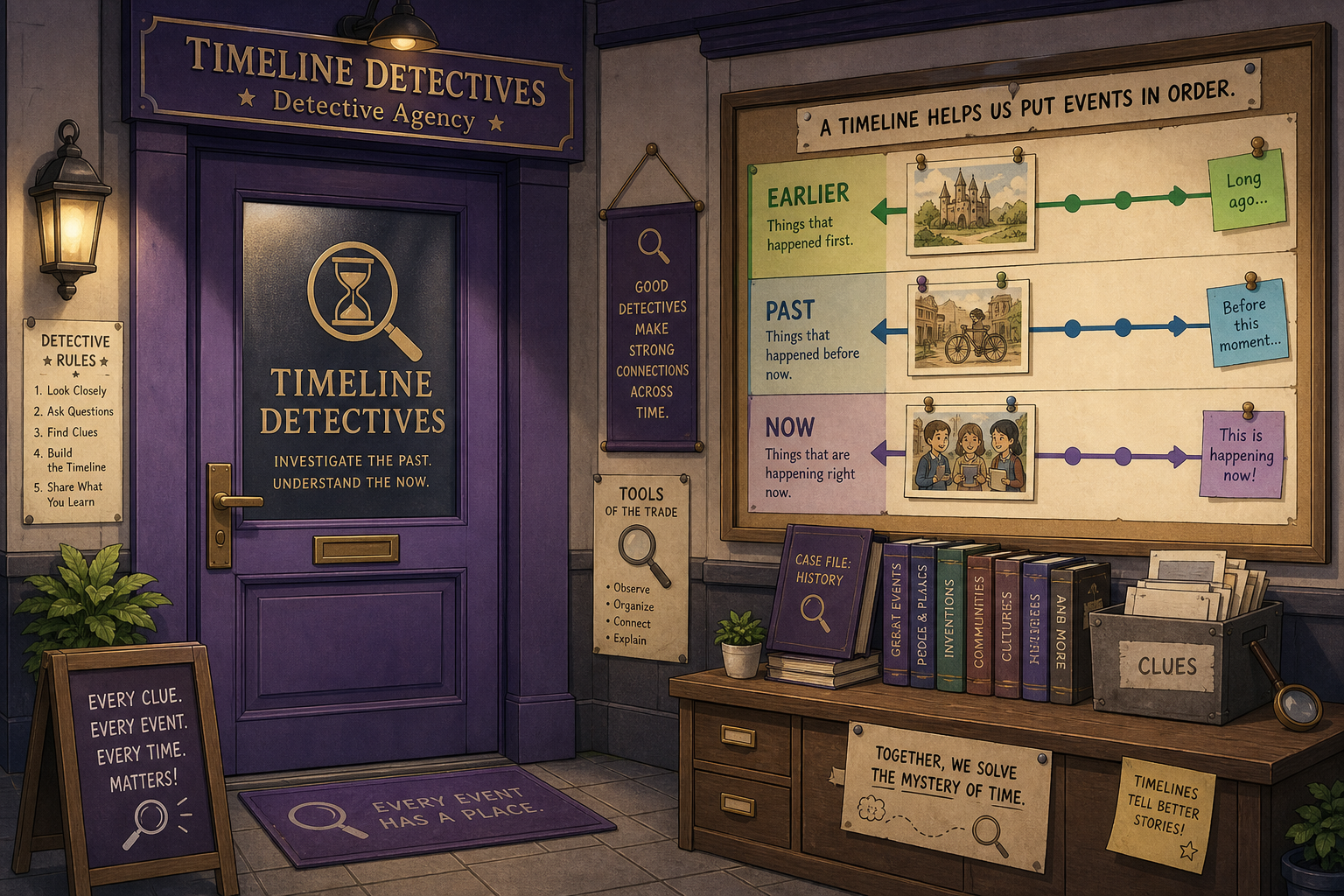
侦探社接案 · 钥匙风波
学会使用过去完成时的用途——在故事描写中更好地理解事件的时间线。
6 / 12
时间轴发现 · 示范案卷
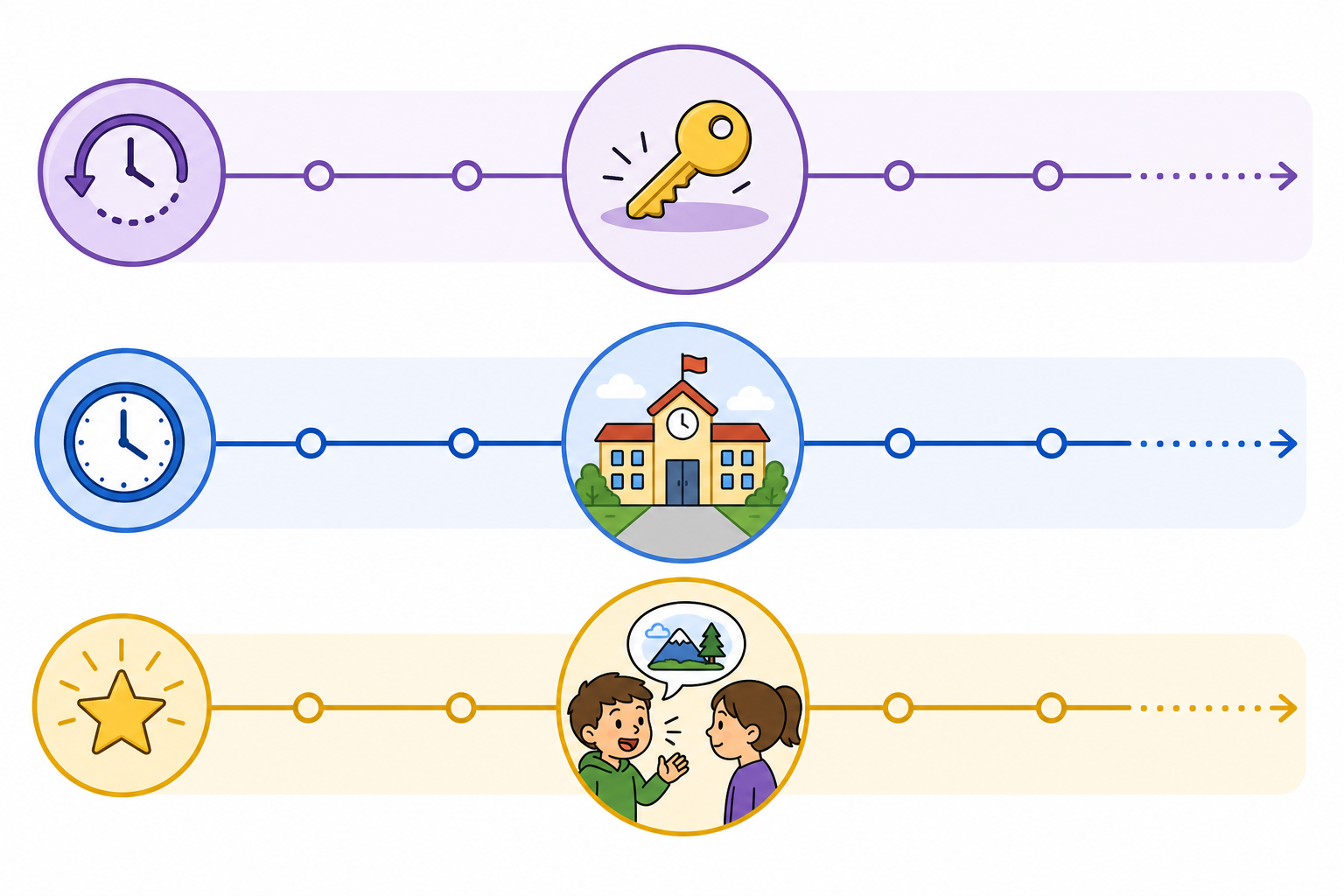
分层 A把三张「事件卡」拖进正确的时间格:更早 / 较近过去 / 现在。也可先点选卡片再点格子(平板友好)。
更早 · Earlier
拖入此处
较近过去 · Past
拖入此处
现在 · Now
拖入此处
7 / 12
发现之旅 · 停电之夜
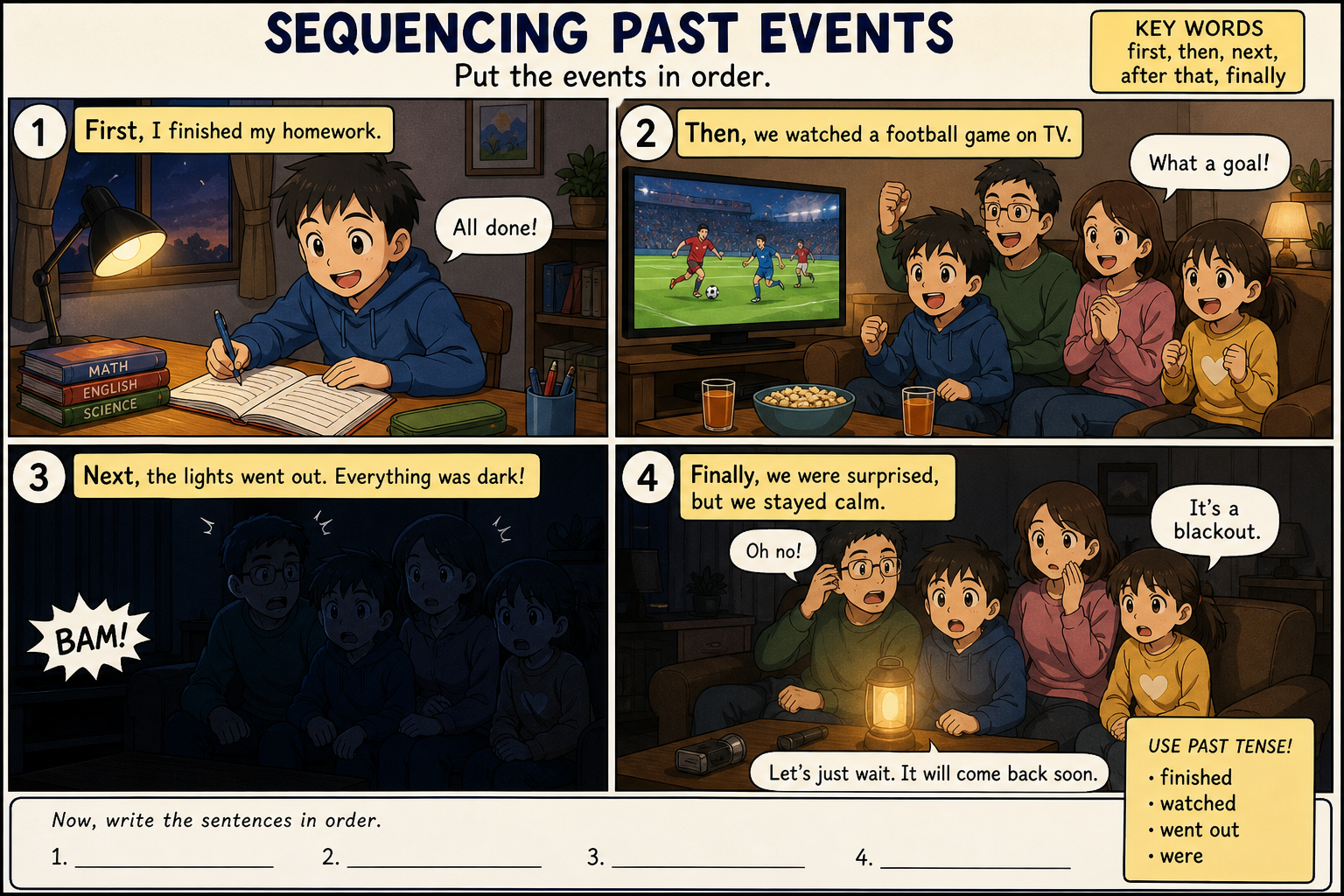
周五晚上:先写作业、再看球赛,突然停电。哪件事发生在 另两件事之前?
更早
较近过去 A
较近过去 B
8 / 12
引导提问 · 博物馆票
分层 A阅读语篇片段,思考哪句表示「过去的过去」。
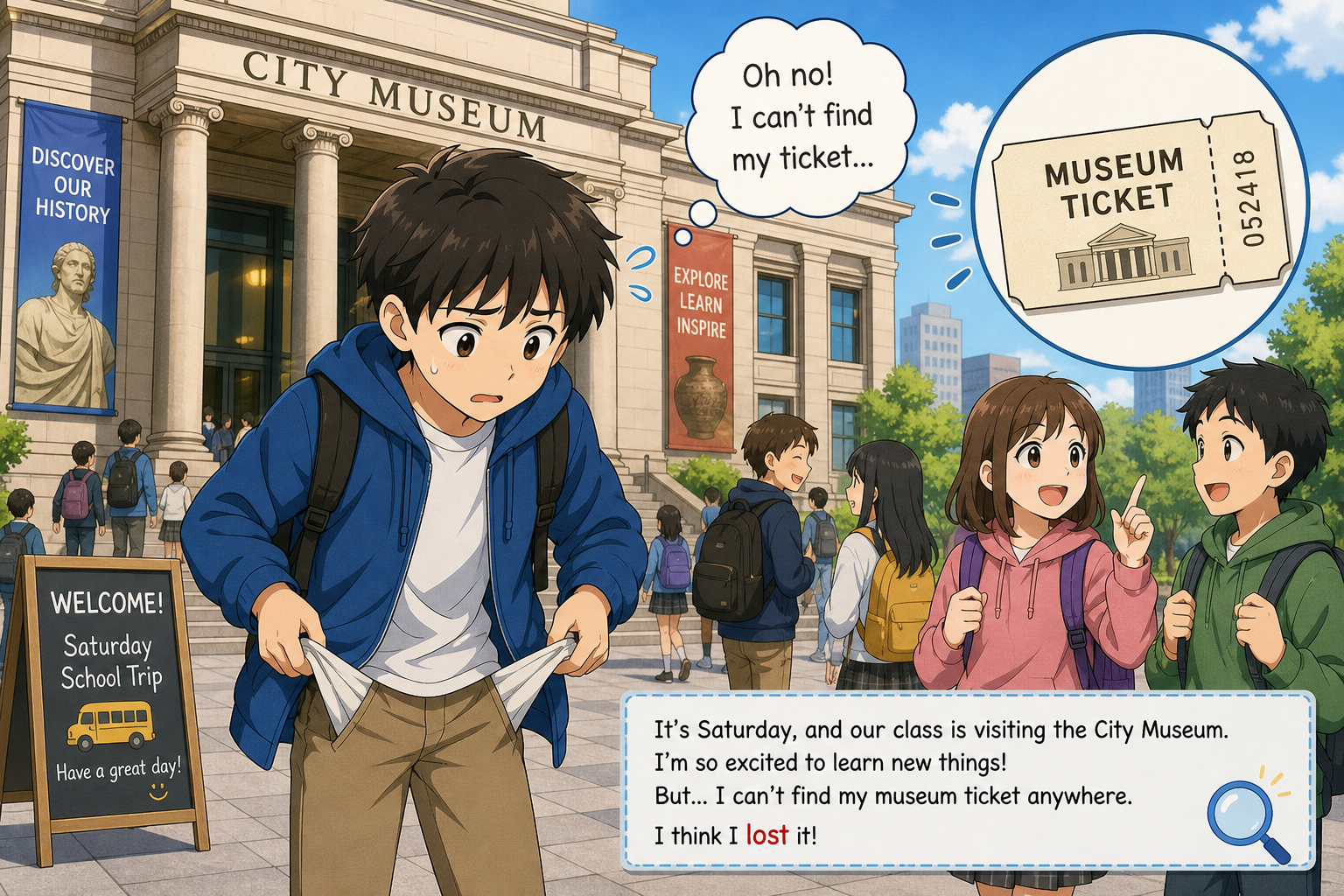
Last Saturday, our class planned a museum visit. Tom had bought his ticket online the day before. When we met at the gate, he looked worried because he had left the ticket at home.
周六计划参观 · 前一天已购票 · 到门口发现票落家里。
9 / 12
归纳工坊 · 我的定义
用你自己的话选一条最贴近的定义(可多选讨论):
选出后显示教研建议。
10 / 12
预告 · 与一般过去时
分层 B同一观察点:较近过去 vs 更早的过去。
11 / 12
快判 · 谁先发生?
分层 B8 题 · 中考高频场景(到校 / 乘车 / 比赛 / 健康)。
12 / 12
本讲路线图
- Page 01 生活导入 + 时间轴发现(本页 · 12 屏)
- Page 02 构成 had + 过去分词
- Page 03 by / before / when
- Page 04 与一般过去时辨析
- Page 05 故事排序
- Page 06 故事复述
- Page 07 当堂测
- Page 08 背诵讲义