热身 · 用中文理解「原话」与「转述」
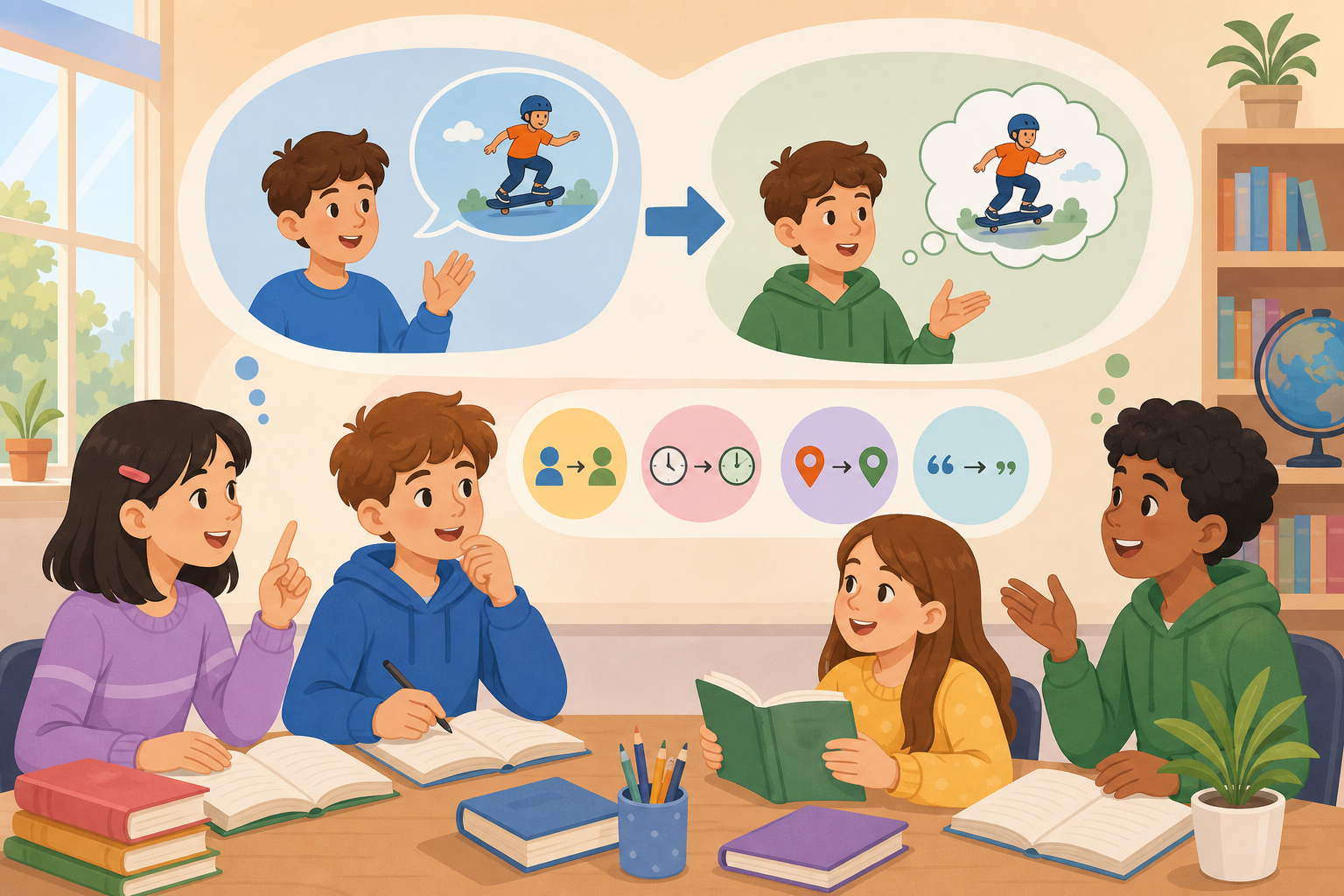
表达别人说过的话,常见有两种方式:一是照着原话引用(书面常加引号);二是把意思嵌进自己的叙述里转述。下面全部用中文做判断与选择,建立「谁在说话、谁在转述、信息要不要跟着改」的直觉。
小例子:小明说:「我今天很累。」妈妈对爸爸讲:小明说他今天很累。——听者要分清:累的是小明;转述时「我」常要改成「他」。
—请选择最恰当的一句转述(向旁人转达原话意思):
概念 · 直接引语与间接引语
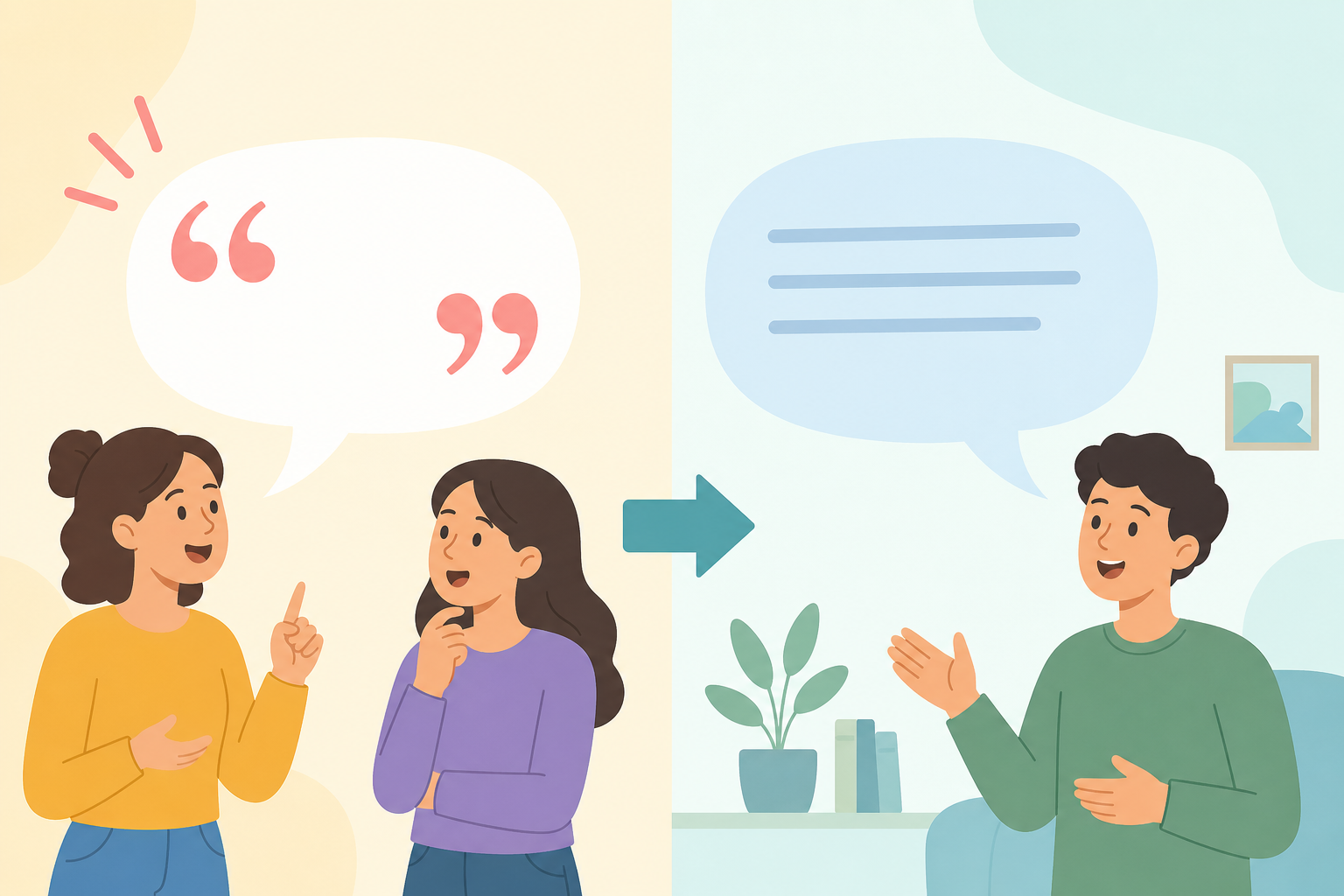
第 1 页用中文练过「原话 vs 转述」;这里用英语里的术语来命名:直接引语与间接引语(转述)。
直接引语:原话照录,常用引号或引述气泡。
间接引语(转述):把别人的话嵌进「He said that … / She told me that …」里,用从句表达原话内容。
对比示例
以下含例 ①与各拓展例,默认折叠;点击标题展开,可课堂朗读「直接 → 间接」并对照说明。
例 ① · 基本对比(am→was;I→he)
He said, "I am happy."
→ He said that he was happy.
- 引导词:that(口语可省,书面本课建议保留以看清结构)
- 从句语序:仍是陈述语序
- 本页新增重点:am → was(时态)与 I → he(人称)
例 ② · want + 人称
She said, "I want some water."
→ She said that she wanted some water.
- 引导词:that(口语可省,书面本课建议保留以看清结构)
- 从句语序:仍是陈述语序
- 本例要点:want → wanted(时态后移);I → she(人称)
例 ③ · we / they 与 will
They said, "We will help you."
→ They said that they would help me.
- 引导词:that(口语可省,书面本课建议保留以看清结构)
- 从句语序:仍是陈述语序
- 本例要点:will → would;we → they;you → me(听者身份)
例 ④ · can → could
Amy said, "I can swim."
→ Amy said that she could swim.
- 引导词:that(口语可省,书面本课建议保留以看清结构)
- 从句语序:仍是陈述语序
- 本例要点:can → could;I → she
例 ⑤ · tell + you(听者)
Mum told me, "You must finish homework first."
→ Mum told me that I had to finish homework first.
- 引导词:that(口语可省,书面本课建议保留以看清结构)
- 从句语序:仍是陈述语序
- 本例要点:told me + that;must → had to;you → I(指听者)
例 ⑥ · 客观真理(不必硬改成过去)
The teacher said, "The earth goes around the sun."
→ The teacher said that the earth goes around the sun.
- 引导词:that(口语可省,书面本课建议保留以看清结构)
- 从句语序:仍是陈述语序
- 本例要点:客观规律常用一般现在(goes 不必改成 went)
例 ⑦ · may → might
Dad said, "I may be late tonight."
→ Dad said that he might be late that night.
- 引导词:that(口语可省,书面本课建议保留以看清结构)
- 从句语序:仍是陈述语序
- 本例要点:may → might;tonight → that night(时间指称)
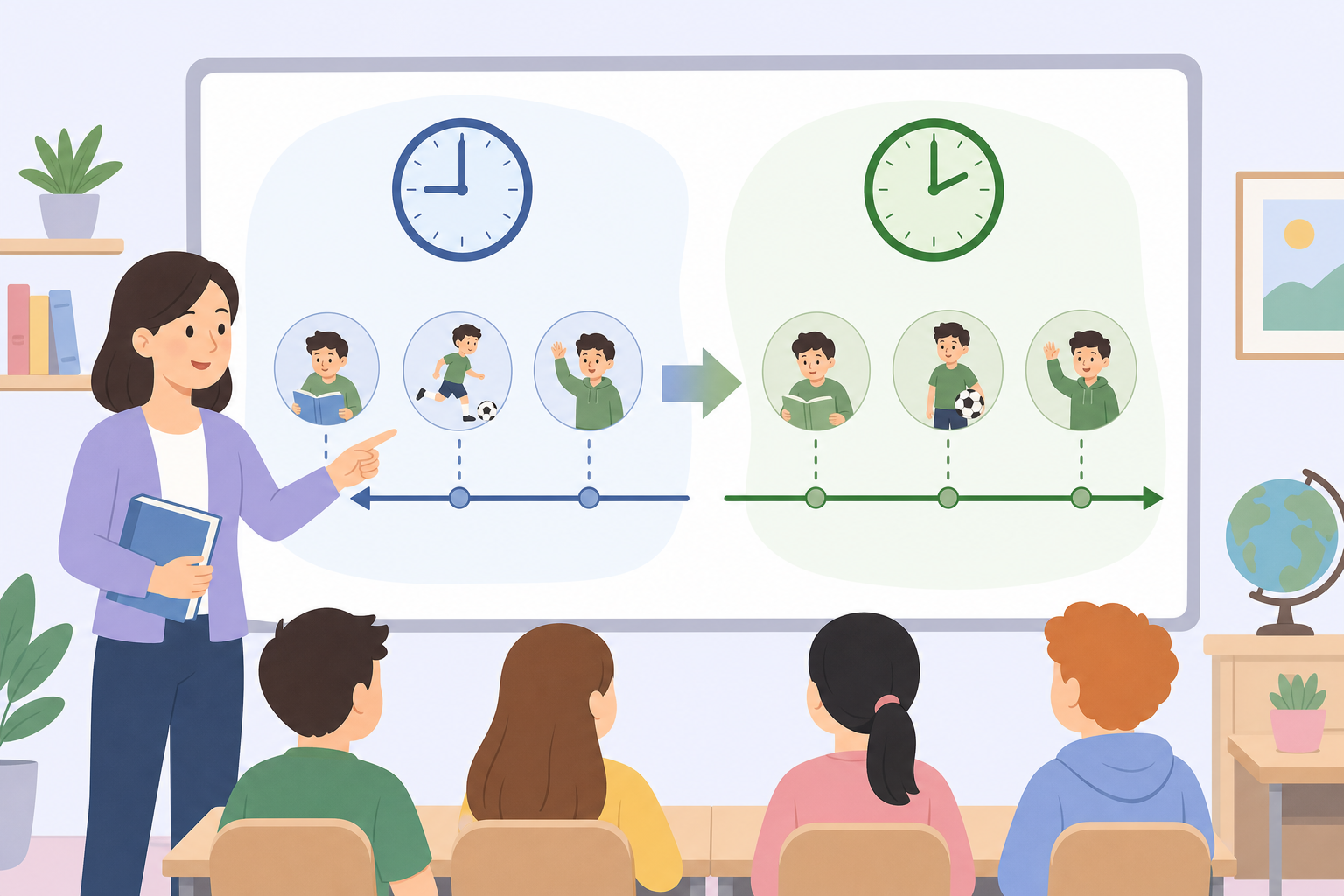
时态 · 主句为 said / told 时(常见后移)
| 直接引语里(从句视角) | 间接引语里(常见变化) |
|---|---|
| 一般现在 am/is/are | 一般过去 was/were |
| 一般过去 did / was | 过去完成 had done / had been(初中点到即可) |
| will | would |
| can | could |
| may | might |
例外(常考):客观事实或规律,如 The teacher said that the earth goes around the sun. 从句仍可用一般现在。
人称 · 代词跟着「谁在转述」变
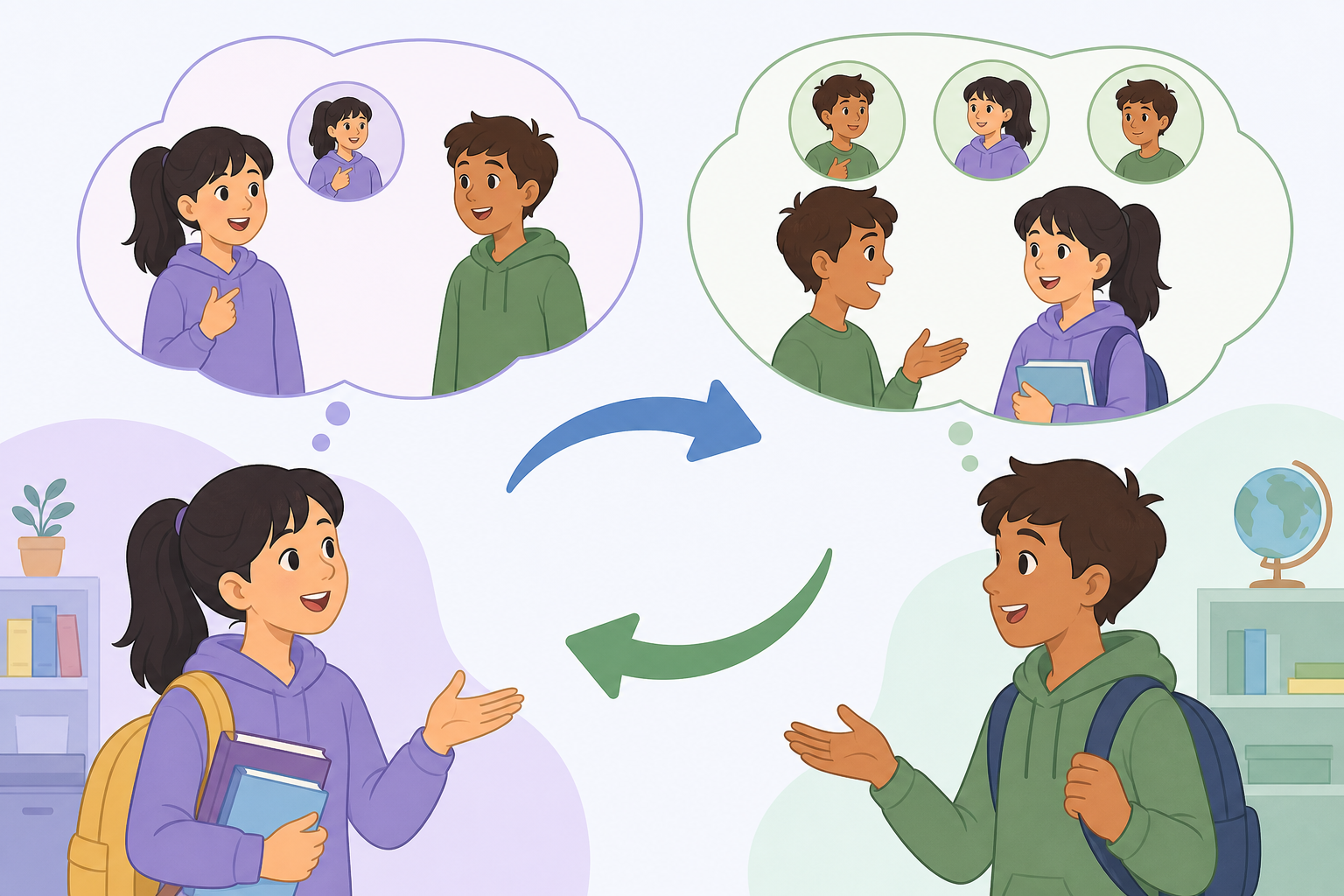
先确定话是谁说的,再决定从句主语用 he / she / they…;若原话里有 you,要分清指的是「听者」还是「泛指」,初中题常给清晰语境。
| 直接(Tom 说自己) | 间接 |
|---|---|
| "I am tired." | Tom said that he was tired. |
| "We will help you." | They said that they would help me. |
提示:my/your/his/her 等物主代词也要与新的主语一致。
套练 A · 听原话,选正确转述
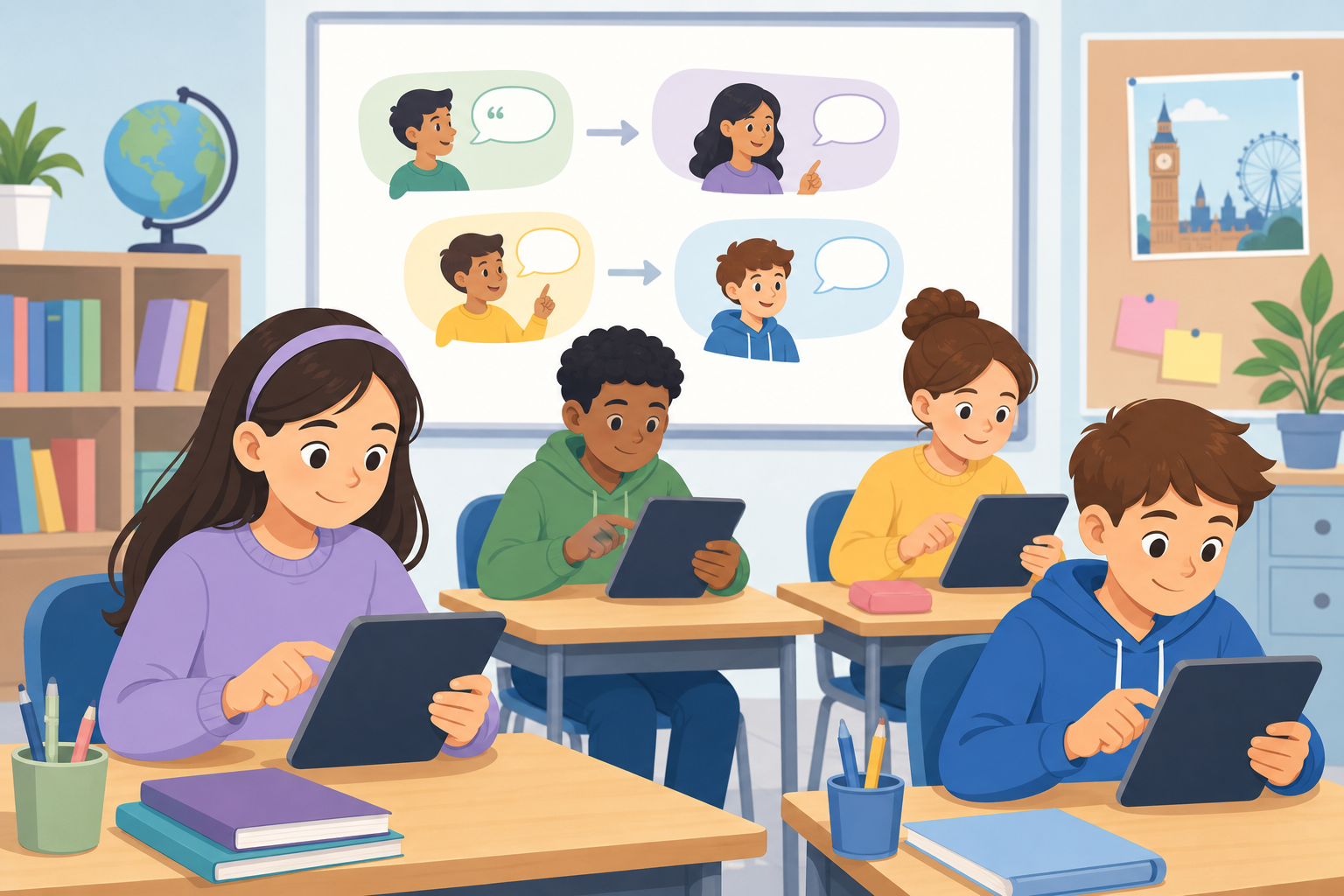
改错 · 时态或人称与转述不匹配
点击展开查看推荐改法(课堂可先让学生自改再对照)。
① She said that she is ready.
She said that she was ready.
② He told me that he will come.
He told me that he would come.
③ Tom said that I am busy.(话是 Tom 说自己)
Tom said that he was busy.
④ They said that we are late.(话是他们自己迟到)
They said that they were late.
⑤ Mum said that she can cook fish.
Mum said that she could cook fish.
⑥ Ben said that the sun was round.(客观真理)
Ben said that the sun is round.
套练 B · 进阶混合(含一条客观真理)
口头练 · 直接引语 → 间接引语
情境故事 · 快要下雨了(多图分镜)

体会 人称(she) 与 时态(is going to → was going to) 如何随叙述视角与时间变化。
读图练 · 图书馆迟还书(人称与时态)
用上一镜 / 下一镜逐幅浏览:左侧为当前镜的放大分镜;右侧先读本镜场景说明,再完成仅与本镜相关的填空(点击虚线空白选词)。
读图练 · 校运会报名(人称与时态)
用上一镜 / 下一镜逐幅浏览:左侧为当前镜的放大分镜;右侧先读本镜场景说明,再完成仅与本镜相关的填空(点击虚线空白选词)。
总结 · 定义后置与自检
转述者变了,从句里的 I / you / we… 与 my / your… 要跟着叙述视角调整。
主句若为 过去转述动词(如 said / told),从句里的时间常常要往回挪一格;若内容是客观真理或现在仍成立,也可保持原时态(本页已各给例子)。
| 直接引语里(常见时态 / 结构) | 间接引语里(主句为过去 said / told 时常见后移) |
|---|---|
| 一般现在 am / is / are;do / does | 一般过去 was / were;did |
| 现在进行时 am / is / are + v-ing | 过去进行时 was / were + v-ing |
| 现在完成时 have / has + p.p. | 过去完成时 had + p.p. |
| 一般过去时 did;was / were | 过去完成时 had + p.p.;had been(动作先于「说」已发生时常用) |
| will;be going to | would;was / were going to |
| can | could |
| may | might |
| must(表必须、义务) | had to |
例外(常考):客观事实、规律、仍在发生的常态可不后移,如 He said that the sun rises in the east.
自检清单
- 从句主语/宾语/物主代词是否已按说话人身份改对?
- 主句若是 过去转述(said / told),从句时态是否合理后移?
- 是否为客观真理?转述内容是否在转述当下依旧成立、有效?若是,不必强行把科学事实与在转述当下依旧成立、有效的内容改成过去时。
- 从句是否始终保持陈述语序?